The Building Before the Boutique: Rooted Here
Updated: Sep 26
Every day I walk into J. Major's, I pass brick pilasters and arched window openings that have nothing to do with wedding dresses, or so I thought. Long before brides found their gowns here, this building was built to make something else: the machinery that ran Charlotte's cotton mills.
I wanted to start this series here, at the building itself, before I tell you about our own forty years in Charlotte. The story of 1900 South Blvd started decades before J. Major's did, and it connects to what brides wore back then in a way I didn't expect until I looked into it.
This series continues in Part 2, on the business itself and the four owners before us, and Part 3, on 25 years of the designers who've filled our racks. In Part 4, we look at how that same shop helped shape wedding planning in Charlotte long before it was its own profession. If you're catching up out of order, all four posts tell one story.
Built in 1904, for a very different kind of craftsmanship
Our building was constructed in 1904 and 1905 as the machine shop for the D.A. Tompkins Company, a firm of engineers, contractors, and machinists. The bronze plaque still mounted on the building lays out exactly what they did here: manufactured cotton oil and cotton mill machinery, rebuilt Corliss engines on their foundations, repaired machinery of every kind, and made patterns and castings of iron, brass, bronze, and aluminum.

This was heavy, exacting, skilled work. The kind that didn't allow for shortcuts, because the mills of the entire Piedmont depended on it running right.
What that machinery actually clothed
Here's the part that surprised me. This building didn't make fabric, it made the machines that let cotton mills turn raw Piedmont cotton into cloth. And in 1904, that cloth was a much bigger part of a bride's story than most people realize today.
The fashion plates of the era show silk and satin, and for wealthy brides, that was often true. But for the vast majority of Southern women marrying in the early 1900s, silk was a luxury out of reach.
A wedding dress was usually the finest cotton dress a woman owned, sometimes trimmed with cotton lace like Battenberg or Irish crochet, sometimes simply a well-made cotton or batiste dress worn once and kept for years after.
The mills that machines like the ones built here kept running were producing exactly that fabric, the cloth ordinary Charlotte and Piedmont brides actually wore, even if it never made it into a fashion magazine.
There's something fitting in that, long before this building had anything to do with weddings directly, the work done inside it was already, quietly, part of how brides across this region got dressed.
The man behind it: Daniel Augustus Tompkins
The company took its name from Daniel Augustus Tompkins, a mechanical engineer from South Carolina who arrived in Charlotte in 1882 and helped turn it from a small market town into the leading textile manufacturing center in the country. By the early twentieth century, Charlotte was producing more textile machinery than anywhere else in the Southeast, and Tompkins's company dominated the field.
Tompkins wasn't only a manufacturer. In 1892, he bought a nearly bankrupt paper called the Charlotte Chronicle and, with editor J.P. Caldwell, built it into the Charlotte Daily Observer, the newspaper that still exists today.
He also pushed hard for technical education across the South, serving nineteen years as a trustee at N.C. State and helping establish textile schools there and in South Carolina and Mississippi. When he died in 1914, Charlotte had grown from roughly 7,000 people to over 82,000, and historians point to Tompkins as one of the people most responsible for that transformation.
Of everything Tompkins built in Charlotte, this machine shop is the only one still standing. Every other piece of his manufacturing complex is gone.
Part of Dilworth's industrial spine
The building sits in what was originally Dilworth, Charlotte's first streetcar suburb, developed starting in 1891 along the Southern Railway corridor. South Boulevard was the industrial backbone of that development, lined with factories, foundries, and mills that gave the area the nickname "the Manchester of Charlotte." Our building was one of the earliest and finest factories built in that district, constructed as the principal manufacturing building for what was known at the time as the Dilworth Shops.
After Tompkins died and his company was dissolved in 1917, the building changed hands more than once.
By 1929 it was being used as a loft building by various manufacturers, and in more recent decades it housed the Piedmont Sewing Machine and Supply Company, a fitting echo of the textile industry that first built it.
There's a good chance someone doing needlework on those upper floors stood in roughly the same spot where our dress racks are today.
A landmark, twice over
In 2001, the building was formally entered into the National Register of Historic Places, recognized for its association with Charlotte's industrial history and with Tompkins himself. A year later, the City of Charlotte designated it a local historic landmark, which means the exterior, and much of the interior, is protected going forward. Any major change to this building now requires approval from the Charlotte-Mecklenburg Historic Landmarks Commission.

That's part of why the bones of this place still feel the way they do. The arcaded brick, the corbelled cornices, the tall arched openings sized to move heavy machinery in and out. They're not decoration. They're original industrial architecture, preserved on purpose.
From machine shop to Steel Yard
Today the building is known as the Steel Yard, home to a mix of offices, shops, and restaurants that have grown up around South End's transformation from manufacturing corridor to one of Charlotte's most walkable neighborhoods. It's a fitting next chapter for a building that spent its first hundred years tied, however indirectly, to how people got dressed for the biggest days of their lives.
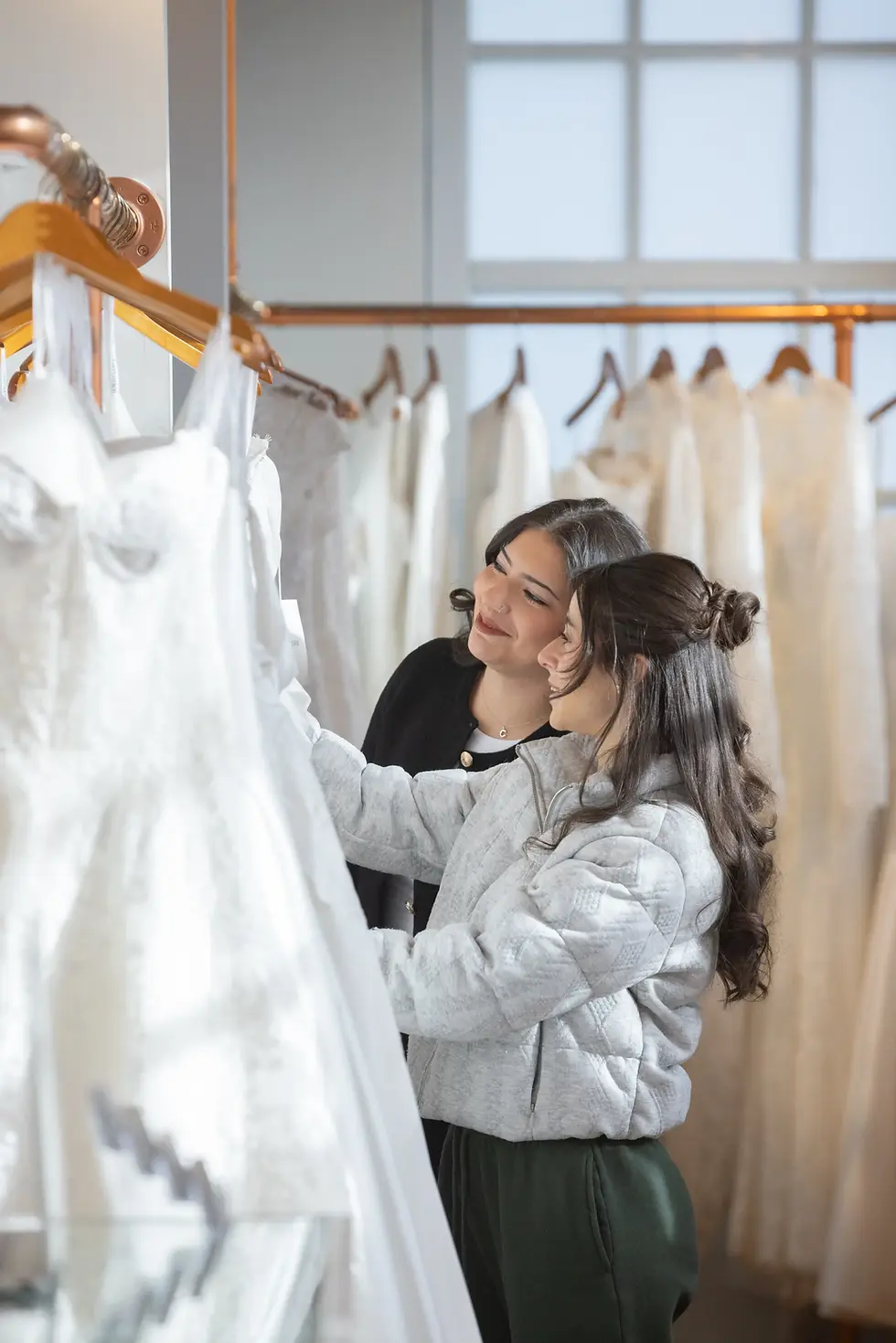
I think about that a little every time a bride tries on her dress in front of our windows. This building has always had something to do with what people wear when it matters most. It just took a hundred years for that connection to become direct.
Next in this series, I'll tell you about the forty years J. Major's has spent inside these walls, starting long before Ravi and I took over.
Madison